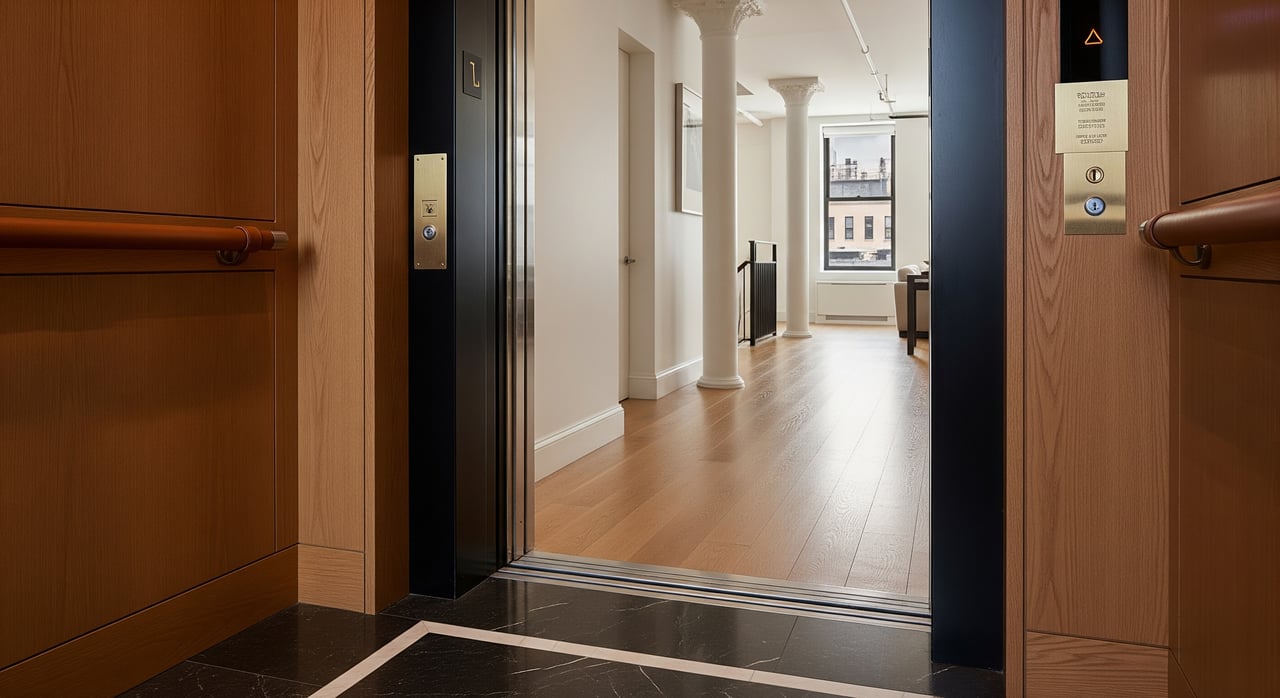
Thinking about a NoHo loft where the elevator opens directly into your living room? Keyed or private elevators are a signature detail in many downtown conversions, but they come with unique benefits and responsibilities. You want privacy and ease, and you also want to avoid surprises on permits, maintenance, and resale. This guide shows you how keyed elevators work, what to verify in New York City, and how to judge long-term value and risk. Let’s dive in.
Keyed elevator basics
What “keyed” really means
A keyed elevator limits access to certain floors or modes unless you use a key, fob, PIN, or similar credential. A “private elevator” usually means the cab opens directly into a single residence or is under the exclusive control of a unit owner. In NoHo lofts, you will often see one of the following:
- Keyed floor access in a common cab: The elevator serves multiple floors, but you need a key or fob to reach residential levels.
- Keyed cabin or independent service: A switch inside the cab turns on independent mode so you can use the elevator privately for a trip.
- Private single-unit elevator: The cab opens right into a dwelling, often in a full-floor or duplex loft.
- Freight conversion with lockout: An older freight elevator adapted for controlled residential use.
- Electronic access control: Modern systems use keycards, fobs, PINs, or smartphone credentials.
What you’ll notice in listings and showings
Look for phrases like “private keyed elevator,” “elevator opens into unit,” or “independent service.” You may see a key switch in the cab or on the landing, or a dedicated door that opens directly into an apartment.
Code and safety in NYC
Who regulates what
Elevators in Manhattan are regulated by the NYC Department of Buildings. They oversee permits, inspections, violations, and certificates of operation. The NYC Fire Department and the local Fire Code set rules for firefighter elevator service and emergency operation. National safety standards such as ASME A17.1 guide contractors and inspectors. Building bylaws, declarations, and house rules add building-specific policies that affect use and alterations.
What to verify before you buy
You want to be sure the keyed or private setup is permitted, safe, and documented. Confirm the following:
- Permits and lawful use: Any conversion of freight to residential or the addition of keyed controls should have proper permits and plan approvals. Check Certificate of Occupancy implications if the configuration changed the building’s use.
- Inspections and certifications: Verify the current certificate of operation, inspection history, and any open violations. Keyed or private modes should not interfere with required firefighter service or recall.
- Accessibility context: Private single-unit elevators do not replace required accessibility where public or common access is mandated by code. Ask how the building meets broader accessibility requirements.
- Landmarks sensitivity: Many NoHo buildings are historic or landmarked. Shafts, entrances, or exterior work can trigger Landmarks Preservation Commission review alongside DOB approvals.
Where to check records
- DOB Building Information Search and DOB NOW: Review permits, inspection records, certificates of operation, and violations.
- FDNY guidance: Confirm that keyed access does not impede firefighter service or emergency procedures.
- Governing documents: Read the condo declaration, co-op proprietary lease, and house rules for access rights and any restrictions.
- Insurance documentation: Ask for policies and endorsements that reference elevator coverage and any claims history.
Operations and maintenance realities
Reliability and modernization
Elevators require ongoing maintenance by licensed contractors. Older or bespoke systems may rely on parts and technicians that are harder to source. Major systems like controllers, door operators, and drive machinery have natural life cycles. In downtown conversions, modernization is a common capital project that should be discussed openly by management.
Contracts, downtime, and response
Review the maintenance contract for service frequency, emergency response times, and parts or labor exclusions. Understand who pays for service in your scenario. If the elevator is a single-unit private cab, an outage can directly affect your day-to-day access, so response time matters. For common cabs, outages affect all residents and can impact deliveries and moves.
Logistics for guests and deliveries
Keyed access can improve privacy for residents but may add steps for guests, contractors, or couriers. Ask how temporary credentials are issued and whether moving-day access requires advance scheduling. For independent service, confirm any house rules about when it can be used and how conflicts are handled.
Costs, reserves, and insurance
Reserves and assessments
Elevator modernization or replacement can be a significant capital expense. Review building reserves, recent or planned assessments, and any reserve studies that mention elevator life expectancy or upgrade plans. In a condo, confirm whether costs are common charges or allocated differently for a private, unit-specific cab.
Insurance and liability
Insurers may expect certain maintenance standards and inspection records. Ask for certificates of insurance and disclosure of elevator-related claims. Where a unit has exclusive control of a private elevator, clarify liability and who insures what. The governing documents should define whether the elevator is a common element or part of the unit.
Market and resale in NoHo
Who values private access
Keyed or private elevators appeal to buyers who prioritize privacy, direct entry, and a refined loft experience. Full-floor residences and downsizers who want level access often see real convenience. On the other hand, buyers who prefer universal accessibility for guests or less complexity may lean toward a traditional common-elevator setup.
Value signals that support pricing
In boutique NoHo buildings, “private elevator” is often marketed as a premium amenity. The actual premium depends on condition, finishes, and whether the elevator offers true private access versus keyed floor control. Clean DOB records, proper permits for any alterations, and recent modernization tend to support higher valuations. Frequent outages, open violations, or unclear ownership and maintenance responsibility are negative signals.
Co-op and condo differences
Co-ops often set tight rules through the proprietary lease and board policies. A board may require special insurance or restrict private modes of operation. In condos, the governing documents define whether an in-unit elevator is part of the unit or a common element, and how maintenance and capital costs are allocated. Read these documents closely to avoid assumptions.
Due diligence checklist
Use this streamlined checklist before you make an offer.
Documents to request
- DOB records: certificate of operation, recent inspection reports, open violations, and permit history for any elevator alterations.
- Maintenance contract: scope, service frequency, response times, exclusions, and contractor license.
- Modernization history: dates and scope for controllers, motors, door drives, and cab refurbishments.
- Insurance: property and liability policies that note elevator coverage and any claims history.
- Governing documents: condo declaration or co-op proprietary lease and house rules on elevator use, responsibility, and access rights.
- Board and management communications: minutes or notices regarding elevator issues, assessments, or planned capital work.
Questions to ask
- Were all elevator alterations completed with DOB permits, and are there any pending violations?
- Who pays for routine maintenance, emergency repairs, and modernization, the owner or the building?
- How often was the elevator out of service in the last 3 to 5 years, and for how long?
- Who is the maintenance provider, and can the service contract transfer at closing?
- Does keyed access affect firefighter service or recall, and how is emergency operation handled?
- Are there guest, delivery, or moving-day restrictions tied to keyed controls?
- Has the building considered or completed accessibility upgrades related to the elevator?
Technical and inspection steps
- Request a recent load test and the latest inspection report.
- If warranted, hire a licensed elevator consultant to review reports, maintenance logs, and expected remaining useful life.
- If the cab opens into the unit, evaluate soundproofing and vibration control. Do a live ride test during your showing.
Showing-day tips
A short in-person test can reveal a lot. Focus on these practical points:
- Sound and vibration: Listen near bedrooms and living spaces. Older shafts and party walls can transmit noise.
- Size and capacity: Confirm the cab fits large furniture, strollers, or mobility aids. Freight conversions are often generous, private cabs can be smaller.
- Egress and delivery flow: Ask how vendors access your floor and how keys or fobs are issued.
- Emergency power and recall: Learn how the elevator behaves during outages and how emergency access is managed.
Final take
A keyed elevator in a NoHo loft offers a rare mix of privacy, drama, and ease. The best purchases pair that experience with clean permits, solid maintenance, and clear governance. If you verify the records, understand the operating costs, and confirm responsibilities, you position yourself for both daily comfort and long-term value.
If you would like tailored guidance on a specific NoHo building or a confidential review of a listing’s elevator history and documents, connect with Filippa Edberg-Manuel for a private consultation.
FAQs
What is a keyed elevator in NoHo lofts?
- A keyed elevator requires a physical key, fob, PIN, or credential to reach certain floors or modes, and a “private elevator” typically opens directly into one residence.
Are keyed elevators legal in NYC buildings?
- Yes, when properly permitted, inspected, and operated; confirm DOB permits, certificates of operation, inspection history, and that firefighter service and recall are not impeded.
Do keyed elevators complicate guest or delivery access?
- Sometimes; buildings may require temporary credentials or scheduled access for guests, movers, and vendors, so ask about policies and logistics.
Who pays to maintain a private in-unit elevator?
- It depends on the governing documents; a condo may treat it as part of the unit or as a common element, which affects who pays for maintenance and modernization.
Do private elevators add resale value in NoHo?
- They can, especially with clean permits and recent modernization, but premiums vary by condition, true privacy, and building records; unresolved violations can hurt value.
What happens if the elevator goes out of service?
- Outages affect access and convenience; review service contracts for response times and confirm contingency plans, especially if a private cab is your main entry.
Will lenders or appraisers care about elevator status?
- They may; appraisal and lending can consider functionality, legality, and inspection compliance, so complete, documented records help the process.