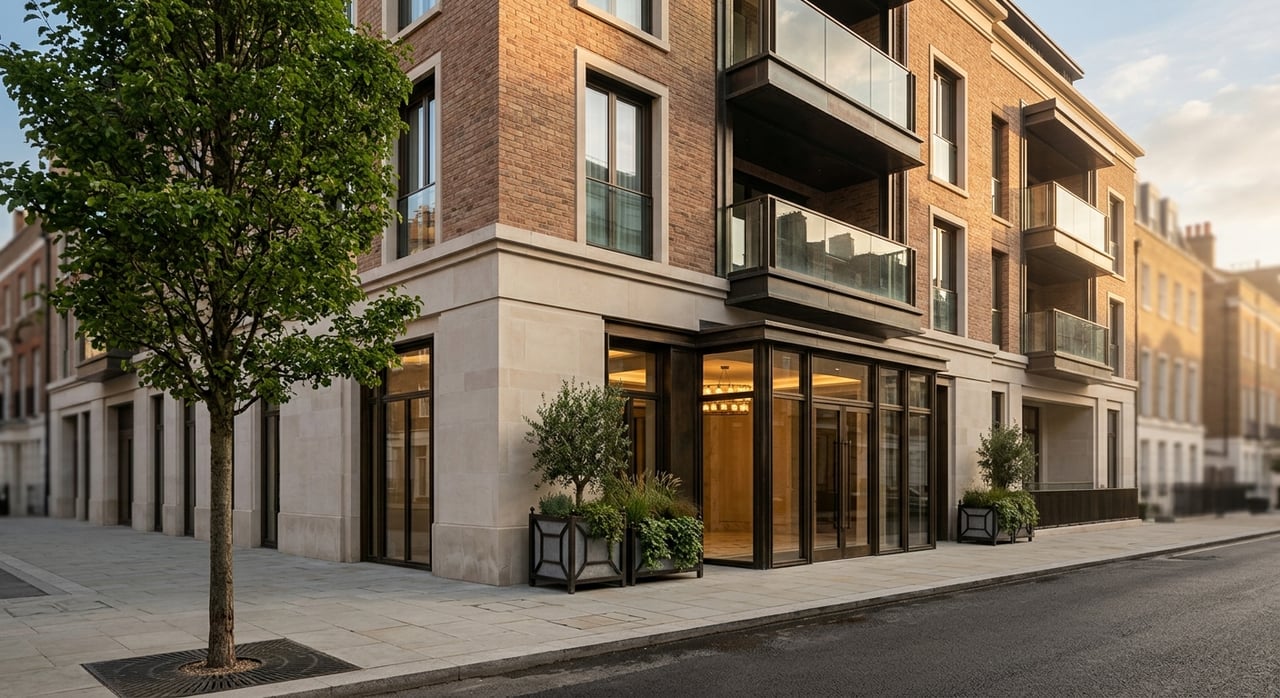
If you want Downtown access without Downtown overload, Hudson Square deserves a closer look. This pocket of Lower Manhattan sits in a rare in-between position, near SoHo’s energy and close to Hudson River Park, yet it feels more composed and less performative in daily life. For buyers who value design, discretion, and a more edited neighborhood rhythm, that balance can be compelling. Let’s take a closer look at what it means to live between SoHo and the Hudson in Hudson Square.
Hudson Square at a Glance
Hudson Square covers roughly 33 square blocks in Lower Manhattan, generally bounded by Clarkson Street, Canal Street, 6th Avenue, and West Street. It sits beside SoHo, Tribeca, and the West Village, which helps explain why it often attracts attention from buyers already focused on those neighboring areas.
At the same time, Hudson Square is not simply an extension of SoHo. State planning documents describe it as primarily commercial, with more than 12 million square feet of office space and a pre-pandemic daytime population of about 70,000 people. The Hudson Square BID also identifies the district as a major creative hub, with roughly 60,000 people working in advertising, design, media, and communications.
Why Hudson Square Feels Different
A commercial core with residential growth
One of the most important things to understand is that Hudson Square is still largely a commercial district. That shapes everything from the streetscape to the pace of the day. You may notice a more structured, workday-driven feel here than in nearby residential-heavy pockets.
That said, the neighborhood’s residential profile has changed meaningfully over the last decade. The 2013 creation of the Special Hudson Square District opened a large portion of the area to residential use while keeping commercial uses dominant, and state planning documents projected up to 2.8 million square feet of new housing through new construction, conversions, and enlargements.
A quieter identity than SoHo
If SoHo can feel retail-forward and highly visible, Hudson Square often reads as more understated. Its history as part of the Printing District, along with its logistics and infrastructure connections, still influences the built environment today.
That legacy helps explain why Hudson Square can feel more discreet and less retail-dense even though it sits immediately next to SoHo. For many buyers, that is part of the appeal. You are close to some of Downtown Manhattan’s most recognized destinations without living directly inside the busiest version of them.
Residential Life in Hudson Square
A boutique, design-led housing mix
Hudson Square is not known for broad residential inventory. Instead, the neighborhood’s housing stock is better understood as selective, newer, and architecture-led, with a mix of condo development, redevelopment, and a limited number of full-service luxury buildings.
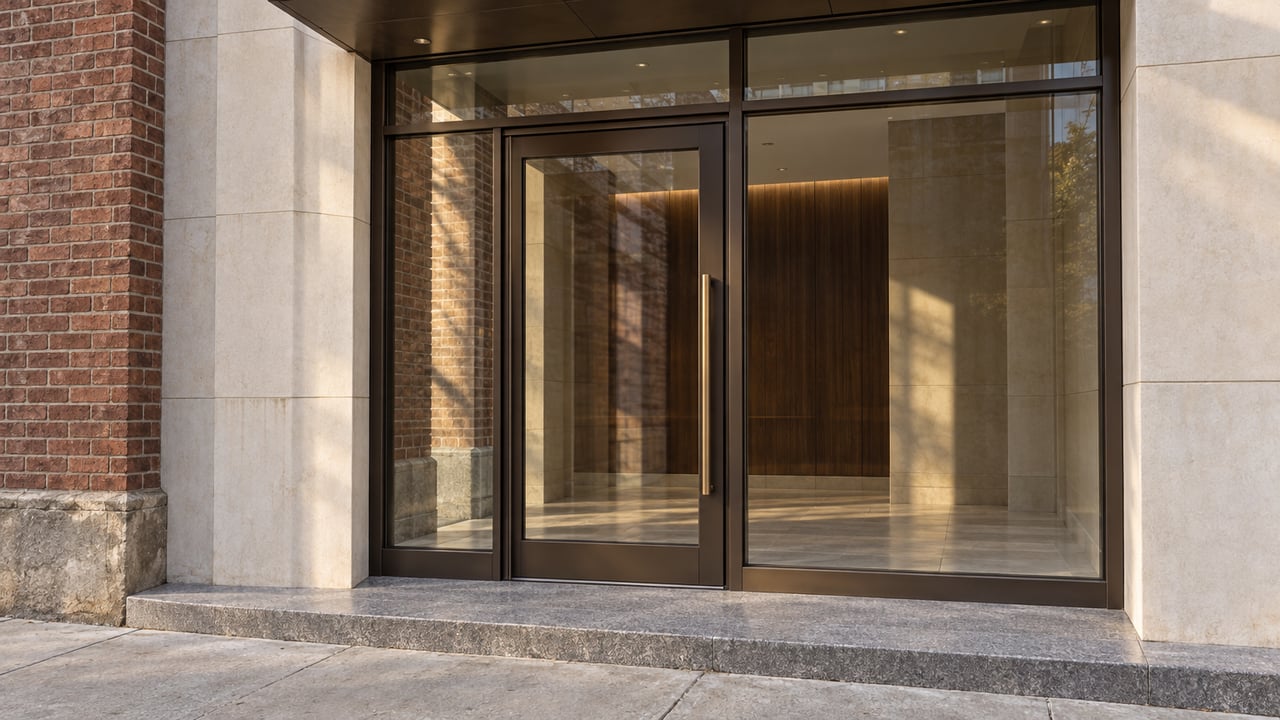
Recent examples help illustrate that profile. 100 Vandam includes 72 homes in a 25-story residential building with a historic former power-plant podium, along with amenities such as a concierge lobby, fitness studio, screening room, media room, playroom, and storage. Other cited luxury projects include 555 Broome, a condominium development with 119 residences averaging more than 2,000 square feet, and 70 Charlton, a luxury multi-family project centered on a private park, landscaped courtyard, pool, sports court, and fitness center.
Limited inventory can shape demand
Taken together, these projects suggest a residential market that feels curated rather than expansive. For you as a buyer, that can mean fewer options at any given moment compared with larger residential neighborhoods nearby.
It can also mean that when the right property appears, especially one with strong architecture, privacy, and services, it may stand out quickly. In a micro-market like Hudson Square, product quality and positioning tend to matter as much as raw square footage.
What Everyday Living Looks Like
Public space is part of the neighborhood story
Hudson Square’s evolution is not only about buildings. Open space and streetscape improvements have played a major role in how the neighborhood presents itself today.
The Hudson Square BID says its master plan and public-realm work have focused on traffic calming, green space, and neighborhood identity. Current and recent outdoor spaces include Spring Street Park, Freeman Plaza East, Freeman Plaza West, and Hudson Square Plaza on Little Sixth. The BID also notes that Freeman Plaza East functions as an art park.
Recent upgrades support a more polished feel
Several of these spaces have been renovated in recent years. Spring Street Park reopened after renovation in 2018, Freeman Plaza West was renovated in 2018, and Freeman Plaza East was renovated in 2021.
There is also more planned public-space work at 388 Hudson Street, including a separate public plaza with greenery, seating, and community gathering space. These details matter because they point to a neighborhood that continues to invest in a more comfortable and coherent public experience.
How Close Is the Hudson?
Near the river, not always of it
On a map, Hudson Square looks very close to the waterfront, and that is true. Hudson River Park is nearby, which is a real advantage for buyers who value access to open air, running paths, and west-facing light.
Still, proximity and experience are not always the same thing. State and city planning documents note that the neighborhood’s western edge remains shaped by the Holland Tunnel and arterial roads, and that access to the waterfront can feel difficult for pedestrians and cyclists even though the river is close.
The western edge has real infrastructure
This is one of the defining truths of Hudson Square. You are near the Hudson, but the riverfront may not feel like the most immediate part of your daily routine in the same way it can in some other west-side neighborhoods.
For some buyers, that is a drawback. For others, it is simply part of Hudson Square’s distinctive balance: urban, connected, and close to the water, while still very much shaped by Manhattan infrastructure.
Dining and Daily Convenience
A compact but credible food scene
Hudson Square’s dining landscape is not as broad as SoHo’s, but it is far from sparse. The Hudson Square BID’s current guide lists a mix of destination restaurants and practical everyday options, including César, La Sirène, Altro Paradiso, Port Sa’id, Houseman, Felix Roasting Co., Maman King, Shake Shack’s Innovation Kitchen, Westville, and Sweetgreen.
That mix supports a neighborhood rhythm that feels useful and livable. You can find restaurants, coffee, and casual staples close by without relying on a nightlife-heavy environment.
More low-key after hours
For many residents, this is where Hudson Square separates itself from nearby districts. The neighborhood has enough dining and café options for convenience, but its core identity remains office- and residence-adjacent rather than nightlife-driven.
If you want to be near SoHo without absorbing all of SoHo’s intensity after dark, Hudson Square may feel refreshingly measured. It offers access without constant exposure.
Development Still Matters Here
The neighborhood is still evolving
Hudson Square is not a static neighborhood. Its residential story is still being written, and that can be important if you are evaluating long-term positioning.
State planning documents say nine new residential properties had been built or were in progress, totaling 1,618 new units, with 18 percent designated affordable. In addition, the city is planning affordable housing and community amenities at 388 Hudson Street, where a future mixed-use project is expected to pair hundreds of affordable homes with a new recreation center and public plaza, subject to rezoning.
What that means for buyers
For a buyer, continued development can signal momentum, new amenities, and a more mature mixed-use identity over time. It can also mean that Hudson Square remains a neighborhood where understanding block-by-block context is especially important.
That is often true in Manhattan’s smaller luxury pockets. A building’s orientation, immediate surroundings, and relationship to traffic patterns or open space can shape your living experience just as much as the address itself.
Who Hudson Square Appeals To
Hudson Square often speaks to buyers who want Downtown Manhattan with a more edited edge. You may be drawn to newer full-service buildings, contemporary architecture, and a neighborhood that feels adjacent to several major districts rather than defined by only one.
It can also appeal if you value design and privacy over constant foot traffic. The neighborhood’s residential inventory is relatively limited, and that selective quality can be attractive to buyers looking for homes that feel tucked into the city rather than placed on display.
Why the Location Works
One of Hudson Square’s strongest advantages is how many directions it opens at once. You are positioned between SoHo, Tribeca, and the West Village, with access to more than five bus lines, eight subway lines, and PATH trains according to HPD materials for 388 Hudson Street.
That kind of connectivity supports a flexible Manhattan lifestyle. Whether your priorities include commuting, entertaining, dining in multiple neighborhoods, or simply moving through the city with ease, Hudson Square is well placed for it.
Final Thoughts on Hudson Square
Living in Hudson Square is less about checking a conventional neighborhood box and more about choosing a very specific Downtown balance. You are near SoHo’s cultural pull and close to the Hudson, yet you are also in a district shaped by design offices, new residential development, curated public space, and a quieter street presence.
For the right buyer, that combination feels sophisticated and intentional. If you are considering Hudson Square and want a discreet, design-conscious perspective on the neighborhood’s residential opportunities, Filippa Edberg-Manuel offers private consultation tailored to Manhattan’s most nuanced luxury micro-markets.
FAQs
Is Hudson Square mostly residential or commercial?
- Hudson Square is still primarily commercial, though it has gained a stronger mixed-use and residential profile since the 2013 rezoning.
What kinds of homes are available in Hudson Square?
- The housing stock is best understood as newer boutique condos, redevelopment projects, and a limited number of full-service luxury buildings rather than a large supply of older apartment inventory.
Is Hudson Square close to Hudson River Park?
- Yes, Hudson River Park is nearby, but access can feel less direct because of West Street and the area’s infrastructure-heavy western edge.
Why does Hudson Square feel different from SoHo?
- Hudson Square combines SoHo adjacency with a stronger office base, more recent residential growth, and a more controlled streetscape, which gives it a quieter and more understated feel.
Is Hudson Square convenient for getting around Manhattan?
- Yes, HPD materials for 388 Hudson Street note access to more than five bus lines, eight subway lines, and PATH trains, which supports strong connectivity across the city.